Remington Model 1917 Rifle Serial Numbers
I have a 1917 Remington receiver that appears to have a very high serial# that I can't locate in any reference material that I have available. The number is 6766xx.I have been told of a contract to supply China? Any help with identifying date of manufacture or any other info would be appreciated. It came to me as a bare receiver in a cosmoline type grease. I don't believe it was ever assembled. Thanks Butch You do indeed have an unusually high Remington serial number.
Ferris published an excellent reference book on the Model 1917 rifle several years ago. The last number recorded in his serial number and barrel date table is S/N 655243. His book indicates that Remington assembled 647,358 complete rifles, but received payment for an unspecified number of spare parts (including receivers) that were in process at the time of contract termination. Your receiver was likely one of those spare parts.
Your receiver was manufactured on or about February 21, 1919. One should note that Remington rifles were not assembled in serial number sequence. So some serial numbers beyond S/N 647358 were most assuredly assembled into complete rifles. S/N 655243 likely falls in the spread of serial numbers undergoing assembly at the time of suspension.
Ferris makes no mention of any special contract to supply rifles to China. No such contract likely existed.
Hope this helps.
I know the answer The U.S. 1917 Enfield was in mass production by Remington, Winchester, and Eddystone.
The guns are as physically identical as that time period allows in terms of quality control. The problem with Eddystone centered primarily on the lack of sophistication in heat treating with a lesser concern as to metallurgy. This does not mean the Eddystone is dangerous or of poor quality.
It does mean the gun was not considered on the same level as either the Winchester or the Remington product. When I was young the 1917 Enfield was a prime source of actions for more powerful cartridges (beyond the.30-06 range). The guns chosen for conversion were the Winchester and Remington actions.
Hi LarryO1970 I do not know of any special serial numbers for a 'good' Eddystone. Any of them would be good with the original barrel. They did meet War Dept. Acceptance and performed well in WW1. My best advice would be to get one if you want one.
As I posted earlier, the Eddystones were just not chosen for higher power conversions during the 1960's. The lack of sophistication in heat treating was 'common knowledge' in the 60's although I do not have specifics as to the degree of hardening on an Eddystone versus a Remington or Winchester. If you have an Eddystone receiver and wish to spend some money there are good metallurgical firms that could re-heat treat to any specification. Click to expand.You have a US Rifle Model of 1917. It was an adaptation of the British Pattern 14 (Pattern of 1914, or P14) in.303 British, which in turn came from the British P13, which was in a new rimless cartridge, the.276 Enfield. The British design was developed at the Royal Arsenal at Enfield, and was based on a Mauser type action. When the Brits feared they would not be able to manufacture enough SMLEs to arm their troops in WWI, they contracted with Winchester and Remington to manufacture the P14 in the USA as a supplemental arm.
Model 1917 Remington Rifle Serial Numbers
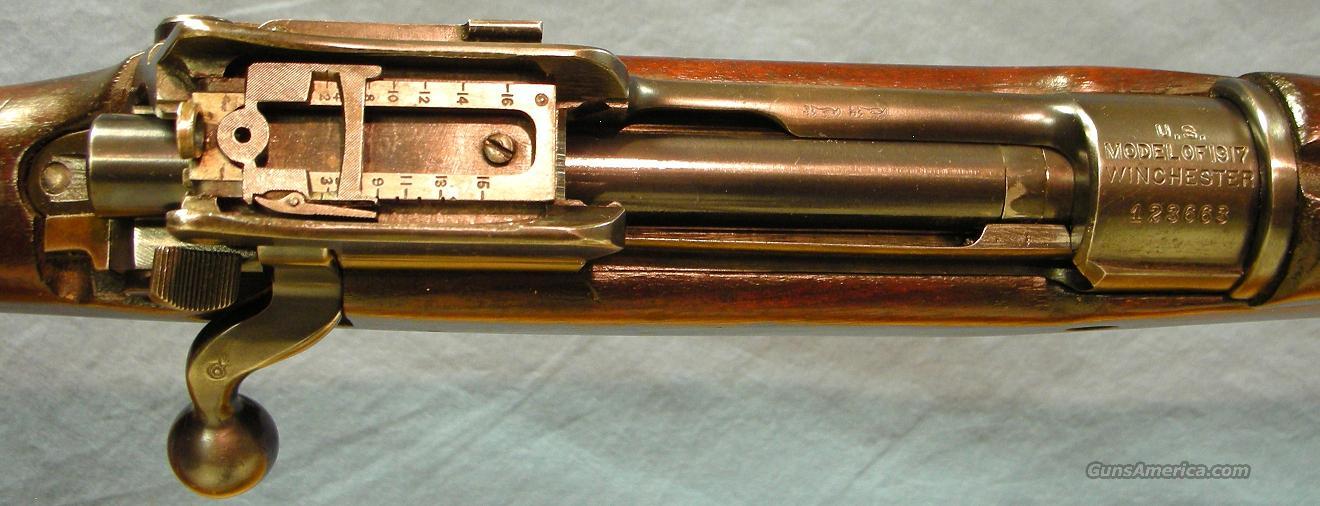
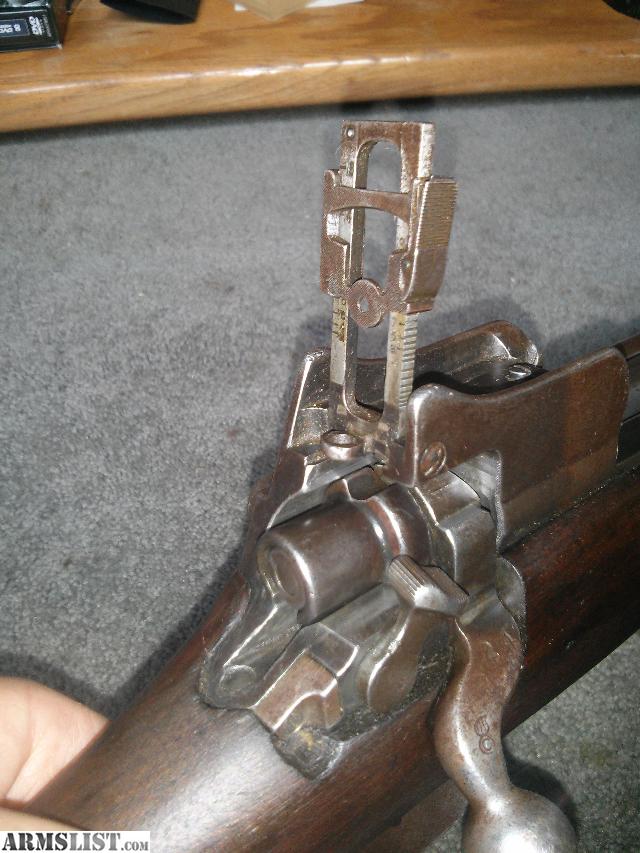
In the event, the Brits were able to manufacture sufficient SMLEs for their needs. When the Brit contracts ran out, coincidentally the US had entered WWI and needed rifles. There was not time to tool up other plants for the US design, the Model of 1903, also based on the Mauser but a completely different rifle from the Brit Enfield-designed P13/P14. It turned out to be easy to convert the P14 back to a rimless cartridge, in this case, the.30-'06, and the result was the Model of 1917. A third plant, in Eddystone, PA, was added to raise production further. The result was that more M1917s were fielded in France than M1903s! After the war, a combination of 'NIH' and the greater suitability of the M1903 as a target rifle sent the M1917s into storage.
Regards, Walt.